Campus Dorm Life in Clark: Rooms, Meals, Laundry
Most English courses in the Philippines are residential. You sleep, eat, and study inside one compound, with a few minutes' walk between your bed, the canteen, and the classroom. That is very different from a language course in Australia or Europe, where you rent your own room and buy your own dinner.
The upside is obvious: no commute, no daily decision about food, one price covering most living costs. What people underestimate is that the building shapes everything else — if you sleep badly or stop eating properly, a full day of lessons stops working. One warning before the details: layouts, meal times, and house rules differ by school and even by building, so read this as a list of things to ask about, not a fixed specification.
Weekends and public holidays: no meals are served.
The canteen serves three meals on weekdays only. On Saturdays, Sundays and Philippine public holidays there is no meal service, so students eat out at the malls and restaurants nearby or order delivery to the dorm. Budget for weekend food separately — it is not included in the package. Philippine public holidays differ from your own country's, so it is worth asking your agency which ones fall inside your stay. Meal rules differ from school to school — how many meals, and on which days — so check this individually with any school you are considering.
Rooms: what you are actually choosing
Residential schools usually offer single rooms, twin rooms, and rooms for three or more. Air conditioning, a desk, storage, and an attached bathroom are the normal baseline — confirm each rather than assume it.
| Single | Twin | Triple or larger | |
|---|---|---|---|
| Privacy | Full | Half | Minimal |
| Price | Highest | Middle | Lowest |
| English in the room | None | Depends on your roommate | Usually the most |
| Sleep risk | Lowest | Low | Highest |
| Suits | Light sleepers, remote workers | Most people | Tight budgets, social learners |
The trade-off is not only money. A single room protects your sleep and gives you somewhere to recover after a day of talking, but it removes the unplanned English of a shared room — which is where the friendships that outlast the course usually begin.
The honest risk is the roommate. Someone who studies until 1 a.m., or who calls home at 5 a.m., can undo a good study week. Agree on quiet hours in the first few days rather than after two weeks of resentment, and ask before enrollment how a room change is requested — it depends on another bed being free, so nothing is guaranteed. Ask about hot water and air conditioning schedules too; both sound trivial in a brochure and matter a lot in a humid month.
three meals a day on weekdays, in the same canteen
Residential programs are normally quoted with weekday meals included, served buffet style in a campus canteen. In Clark, where many students come from Korea and Japan, menus tend to be rice-based, with a Korean-leaning core mixed with Filipino and Western dishes. Think dependable canteen cooking, not restaurant cooking.
Two honest points. Meal times are fixed, so if a class or a nap runs over, you miss that meal. And the novelty wears off: week one is interesting, week three is repetitive, and this is where students start skipping breakfast and running out of energy before lunch.
What actually helps:
- Bring food from home that survives travel — sauces, dried seaweed, instant noodles, tea. A shared space for boiling water is common, and you can restock at a supermarket on weekends.
- Budget separately for eating out once or twice a week. It is the cheapest fix for food fatigue.
- Declare allergies or religious dietary needs through your agency before enrollment. A kitchen cooking for a whole campus has limited flexibility, and it is better to learn the limits early.
Drink filtered or bottled water rather than tap water. For a closer look at what lands on the tray, see meals and food at Clark English schools.
Laundry, cleaning, and the drying problem
Laundry runs one of two ways: collection and delivery on set days, or a self-service area. Either way, confirm the frequency, whether it is included in the price, and whether extra loads cost more.
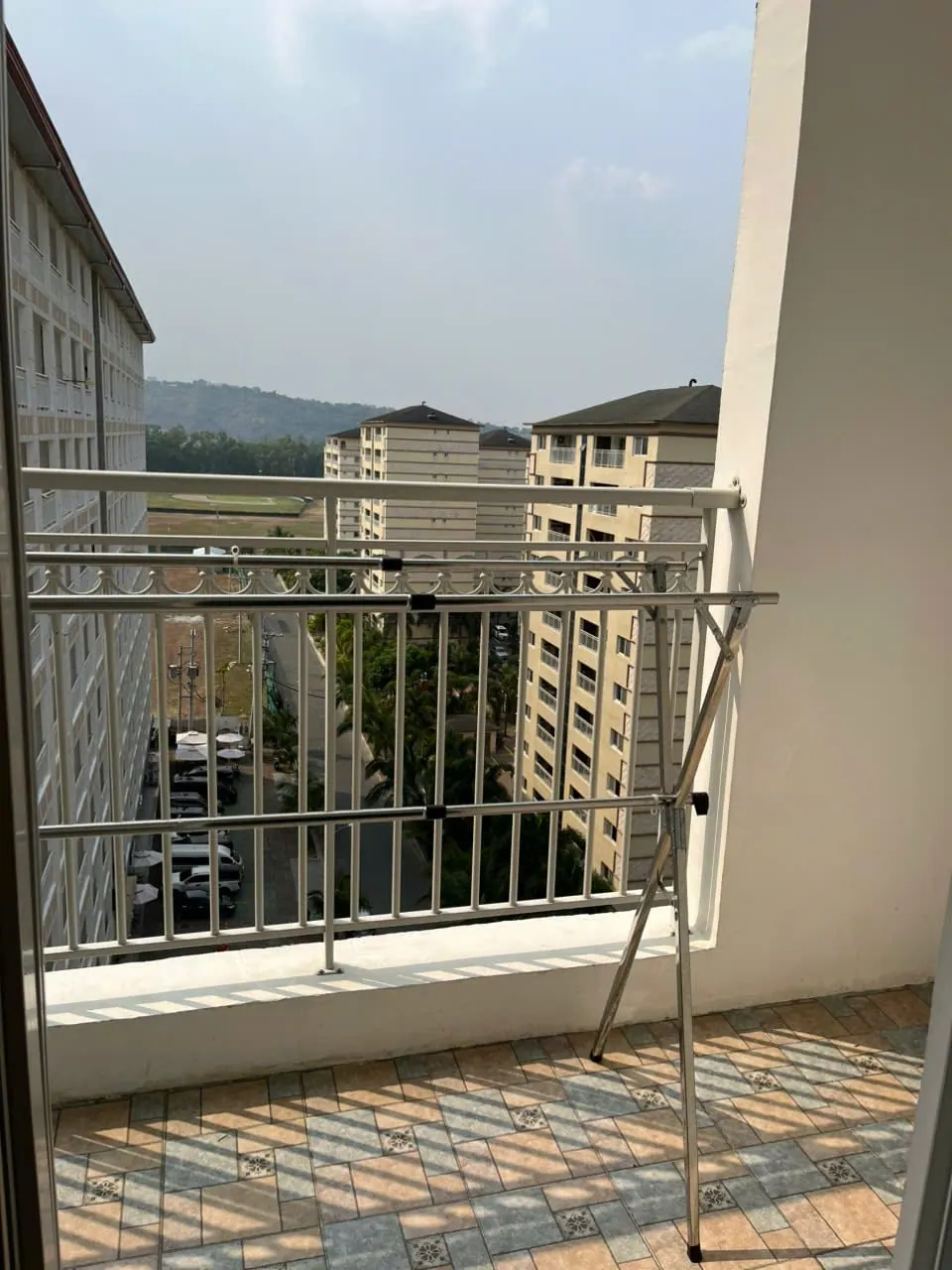
Then plan for humidity, which is the part that surprises people. Clothes hung indoors can still be damp a day later, and damp clothes folded into a wardrobe make everything smell. A few habits prevent most complaints:
- Use mesh bags for underwear and thin fabrics, and label your clothing. Items do get mixed up in a shared service.
- Hand-wash anything delicate or expensive. Assume a commercial service will not be gentle.
- Pack more underwear, socks, and towels than you think you need, since the cycle may be slower than at home.
- Ventilate the bathroom and never leave wet towels in the room. That solves most mold and odor problems.
Room cleaning is usually periodic rather than daily, and the scope varies, so ask at orientation what is yours to do.
What to bring
| Item | Why it matters |
|---|---|
| 2–3 mesh laundry bags | Protects thin clothing in a shared wash |
| Extra towels, quick-dry shirts | Cotton often does not dry overnight |
| A light jacket | Indoor air conditioning is colder than you expect |
| Bathroom sandals | Wet floors, shared spaces |
| Hanging toiletry bag | Bathroom storage is often limited |
| A padlock | Lockers and luggage in shared rooms |
| Earplugs and an eye mask | Cheap insurance for shared-room sleep |
| Your medication, plus a copy of the prescription | Your usual brand may not exist locally |
The Philippines runs on 220V with US-style flat pins, so check your devices before buying adapters. Leave heavy books and bulky bedding at home; bedding is normally provided, but confirm what your room type includes.
Questions people ask before booking
Can I choose my roommate?
Sometimes, but not automatically. If you are traveling with a friend and want to share, raise it during enrollment.
Is the room rate everything I pay?
No. Philippine government fees for students are separate and paid locally: an SSP at ₱7,800 per application, an ACR I-Card at ₱4,500 for stays over 59 days, and visa extensions at roughly ₱3,000–6,000 each. Note that the SSP is not always a single lifetime payment — some immigration offices issue it only for the registered course length. The full breakdown is in the real cost of studying English in Clark, and month-to-month spending in monthly living expenses beyond tuition.
Can I cook in my room?
Generally no. Boiling water in a shared space is common; full cooking usually is not. If self-catering matters to you, a residential school is the wrong format.
Is there a curfew?
It depends entirely on the school, from set curfews and mandatory study hours to almost no rules for adults. This is one of the biggest differences between schools, so ask directly.
The short version
Choose the room by how you recover, not by what sounds impressive: pay for privacy if you sleep lightly or work remotely, share if you want the language and the friendships. Expect food that is dependable rather than exciting, and plan your own supplements from week one. Treat laundry and humidity as a habit, and pack for them.
Everything specific — room types, meals, laundry operation, house rules — should come from the school in writing before you pay. Enrollment is handled through partner agencies rather than directly with the school, so ask your agency to put the details in the quotation.