Twelve Weeks in Clark After Retiring — Daisuke Irisawa's Story
"Is there any point starting English at my age?"
It is usually the first thing said in a conversation about studying abroad later in life. And if we are honest, the worry is not really about English. Three months in an unfamiliar country — will my body hold up? Will I sleep? What about the food? What about the bathroom?
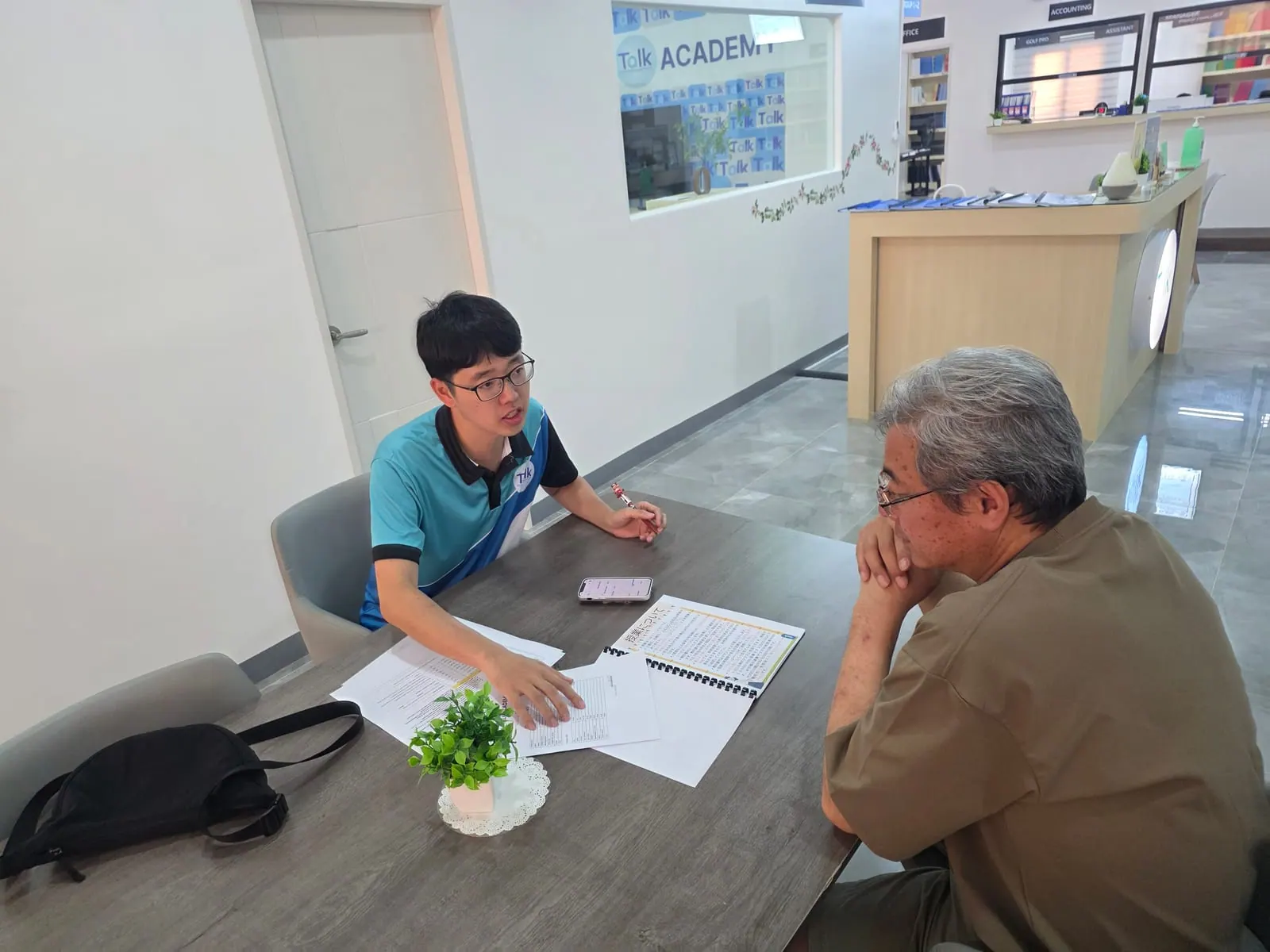
This is the record of someone who went through all of it. Daisuke Irisawa spent twelve weeks at Talk Academy — a new challenge he set himself after retiring.
Before "is there a point," there is "will daily life hold"
Something stood out the first time we read his account: there is almost nothing about scores or levels. What he writes about is where he slept, the bathroom, the food, how weekends went.
Which makes sense on reflection. A younger student can push through most inconveniences on momentum alone. Whether you can spend three months in a settled state is decided almost entirely by the quality of daily life. Whether a later-in-life stay succeeds or fails usually sits outside English.
So this article follows that order too.
First, the bed and the kitchen
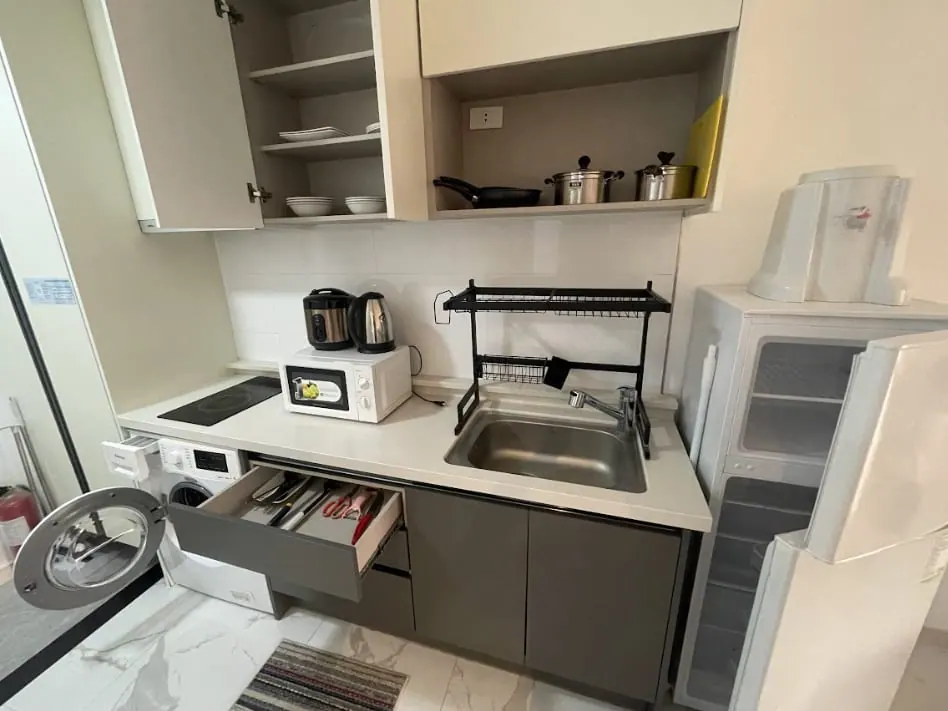
The dorm was clean and spacious, I could cook simple meals in the kitchen, and I slept comfortably in a queen-size bed.
For three months you sleep in that bed every night. If this part is wrong, everything else collapses with it. A run of shallow nights and your concentration in class drops and your health follows. That effect arrives faster than it would for a younger student — that is the reality of studying later in life.
Having a usable kitchen matters to this age group too. If the school food does not suit you, you can make something yourself. Just having that option removes a great deal of anxiety about eating. You do not have to cook every meal. **The fact that you *could* is what does the work.**
Kitchen access varies by building and by room type, so it is worth confirming rather than assuming. The questions to ask before booking are in Cooking in the Dorm Kitchen: What to Check First.
The most accurate look at the campus and dorm is the footage he filmed himself.
And then, the bathroom
Brochures never mention this, but it is one of the most practical worries about staying abroad. Irisawa addresses it directly.
The toilet flushed paper the same way it does at home and had a bidet, so I felt at ease even overseas.
Across much of Southeast Asia the convention is to put paper in a bin rather than flush it. That is a plumbing specification, not a question of cleanliness. But for anyone not used to it, it is a daily occurrence, and it quietly adds up.
Almost nobody asks about this before booking. They find out after arriving. We judged it worth knowing in advance, so it stays in.
Why one-on-one suits this generation in particular
On the lessons, he named one thing.
Lessons were one-on-one, so I could focus on my own weak points — pronunciation, conversation. The teachers were kind and answered my questions carefully.
Group classes carry a structural disadvantage for older learners. Mixed in with younger students, it is easy to fall behind the pace of the room. Stopping to ask again about something you missed feels awkward. The result is more and more time spent nodding along.
One-on-one removes that problem entirely. You stop where you want to stop. You can repeat the same sound ten times and nobody is waiting. For someone returning to English after decades away, that difference is decisive.
"Answered my questions carefully" is really saying the same thing. Whether a teacher is easy to ask shapes how efficiently this generation learns.
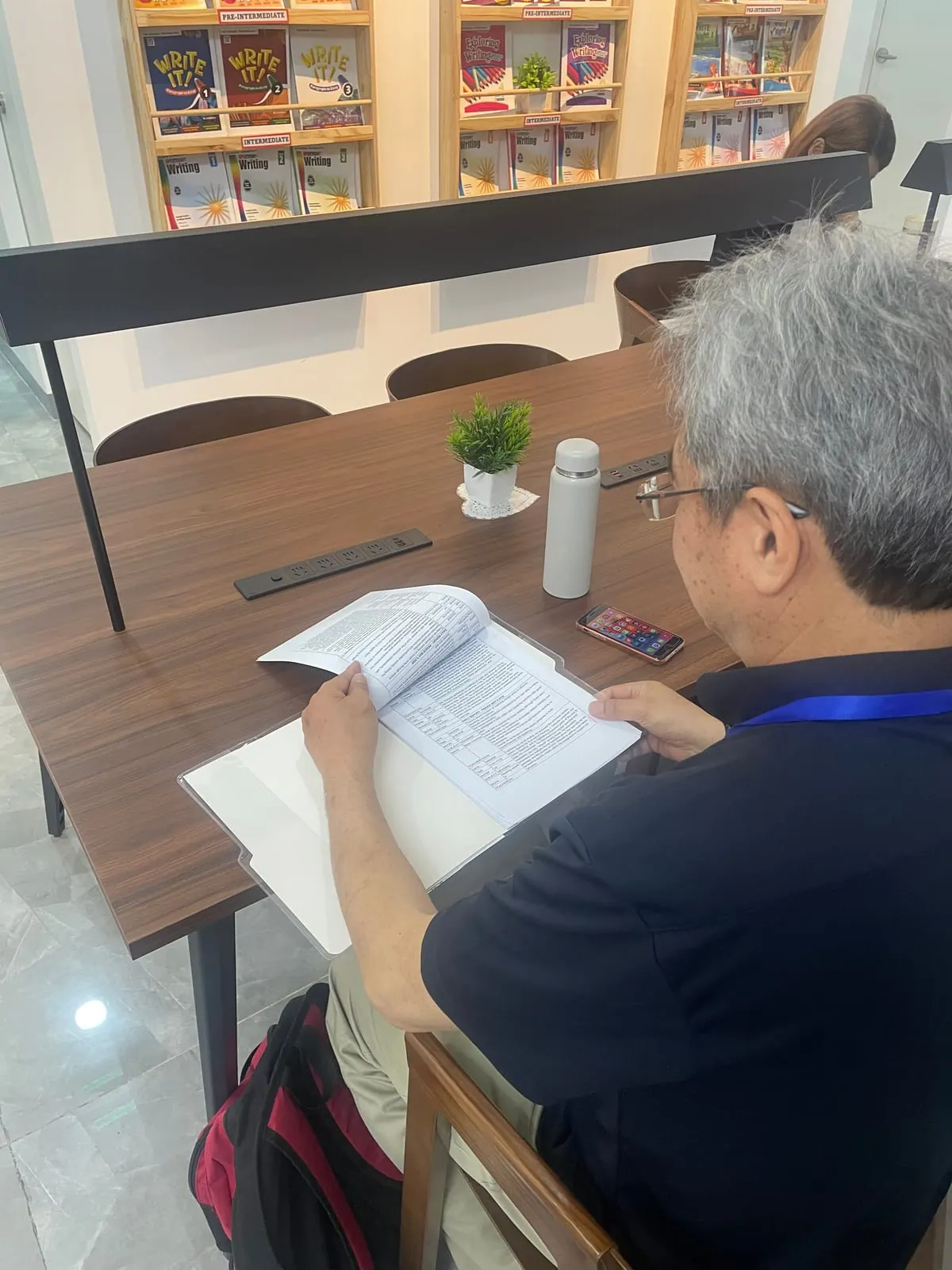
A clarification: Talk's Hybrid course combines one-on-one and group lessons. These are not native-speaker classes. Clark as a district does have a large Western expatriate population, but the teachers who work with students at Talk are Filipino.
Weekends do not have to be spent alone
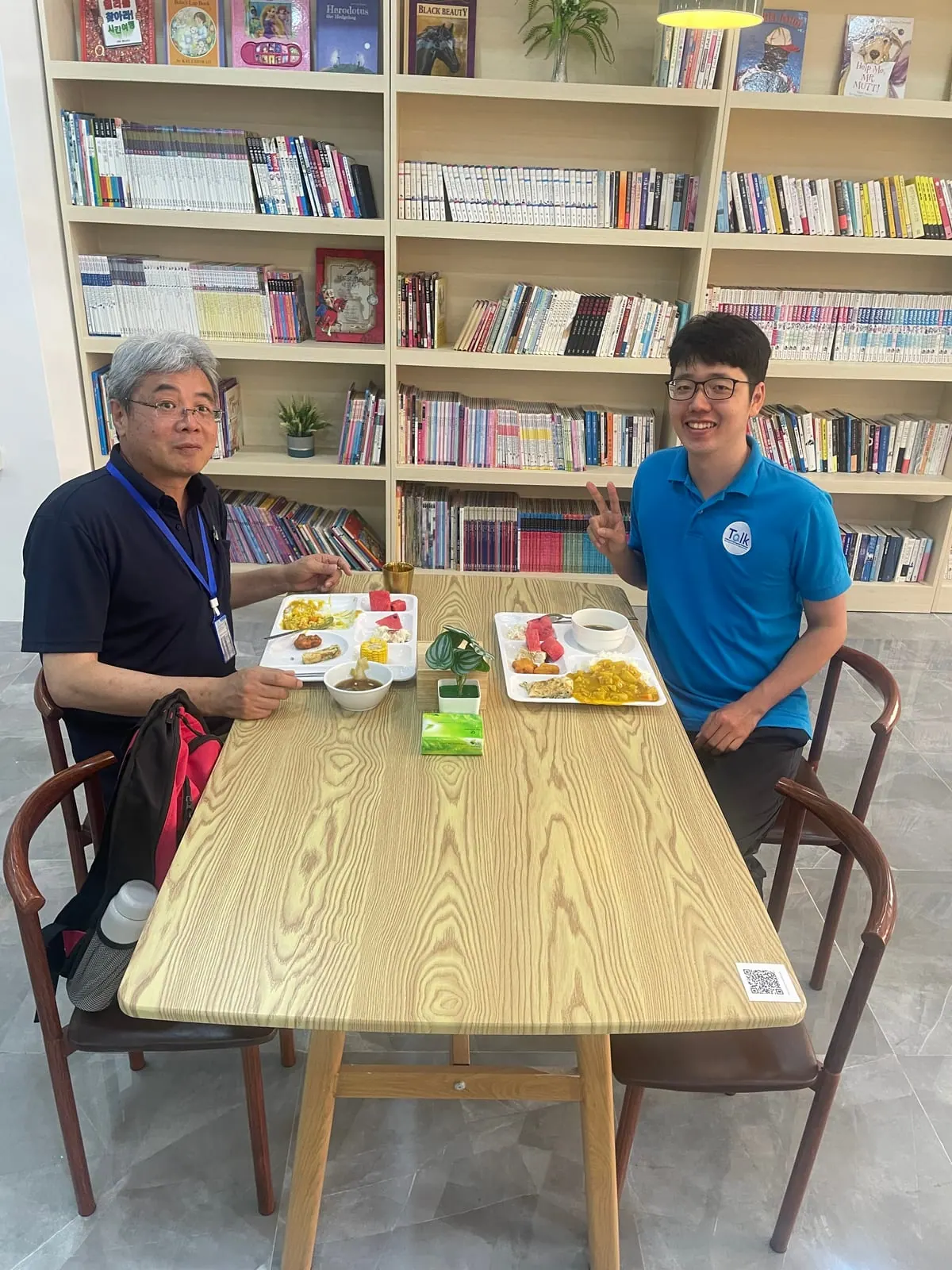
At weekends the Japanese staff took us to the mall, and I enjoyed shopping and eating out.
How weekends go is the most overlooked item when planning a stay later in life. Weekdays fill themselves with lessons; Saturdays and Sundays do not. A run of weekends spent in your room, in a city you do not know your way around, makes three months feel very long.
Having staff who speak your own language come along means more than convenience at this age. It turns "I'd like to go but not on my own" into "let's go."


It was not only English
I got to know not just English but Filipino culture as well. It was a full and rewarding time.
That is his conclusion after twelve weeks, and it says something particular about studying later in life.
For younger students, a stay abroad is usually a means to something — a university place, a job, a score. After retirement there is no next step it feeds into. Which frees the language itself, and the place itself, to be the point.
Having no reason to hurry is not, as it turns out, a poor condition for learning.
Seven things worth checking if you're considering this later in life
Drawn from Irisawa's account. Use it as a comparison checklist when weighing up schools.
- Bed size and the state of the bedding. You use it every night for three months. Check photos, or find a current student's account.
- How the bathroom works. Does it flush paper? Is there a bidet? This varies by region.
- Whether there's a usable kitchen. You don't need to cook every meal — it's having the option that counts.
- The proportion of one-on-one lessons. Group-heavy schools can be a poor fit for this age group.
- Whether staff speak your language. The difference shows up in two places: falling ill, and weekends.
- How weekends are handled. Is there any accompaniment or outing programme? Weekends spent in your room make three months long.
- Access to medical care. Is there a partner clinic? Does anyone go with you?
Frequently asked questions
Q. Can I really improve starting at this age?
A. It is true that retention takes longer than it does for younger learners. But this generation has one real advantage: time. Note that the result Irisawa names is not a score — it is having been able to work on his weak points directly. Learning with a clear purpose can be more efficient at this stage of life, not less.
Q. Will there be students my age?
A. It varies by school and season. In a one-on-one-heavy setting, though, the age mix around you affects your learning only marginally — the lesson happens between two people.
Q. I'm worried about my health.
A. Check two things before booking: whether there's a partner clinic, and whether any staff speak your language. With both in place, response times are completely different.
Q. Isn't twelve weeks too long?
A. It depends on your purpose. For Irisawa it was framed as a new challenge after retirement, so a settled stretch of time suited it. Starting short and extending is also an option.
Enquiries go through our partner agencies
Enrolment and quotations for Talk Academy are handled by partner agencies in each country. For dates, courses, dormitory types and costs, please contact the agency for your region.
*This article was assembled from the written account, photographs and video submitted by Daisuke Irisawa, published with his permission. He completed a twelve-week course at Talk Academy in 2026.*