Group classes at an English school in the Philippines: whiteboard, cold-calling and turn-taking — a class that keeps you talking (Chih-Jen)
When people research group classes at an English school in the Philippines, the real question is how the lesson actually runs. Everyone sees "four one-to-one, two group"; few see the mechanics. Taiwanese student Chih-Jen Tsai, on a 20-week Talk 4 Hybrid A course at Talk Academy in Clark, described exactly that.
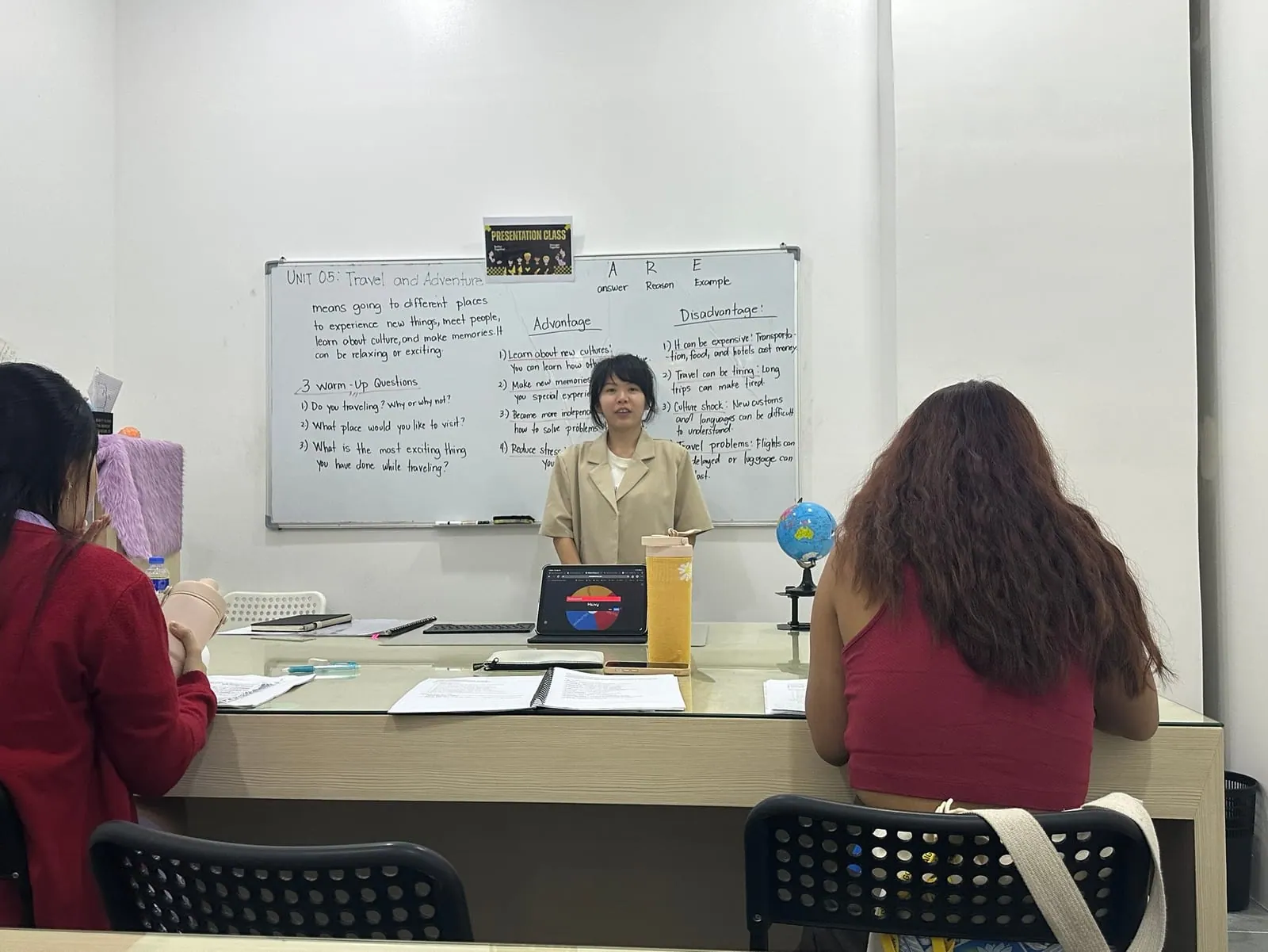
Group classes at an English school in the Philippines — topic, whiteboard, cold-calling
Take a topic like 'travel and adventure': the teacher writes the key points on the whiteboard, then calls on people to answer or has everyone share their view in turn, so you keep opening your mouth in English.
The value of this paragraph is that it describes mechanics, not feelings:
- a topic gives you something to say,
- the whiteboard fixes the key points,
- cold-calling removes the hiding places,
- turn-taking makes everyone produce a full chunk of speech.
If you leave a lesson thinking "I understood it, but I barely said anything", the last two steps are usually missing. Why group size matters is clearer alongside the "division" argument in nationality mix at English schools in the Philippines — Thanh Hà.
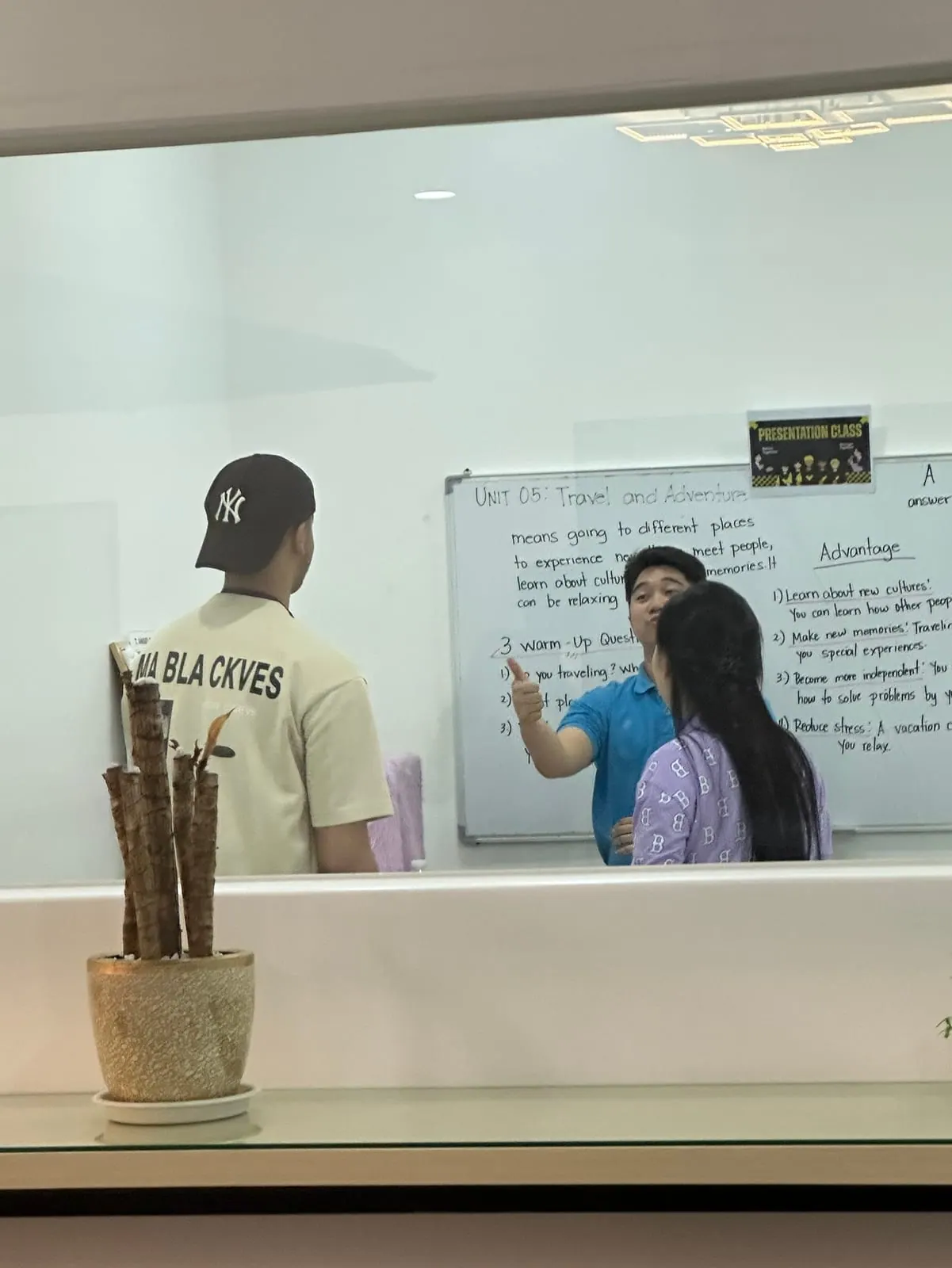
"Won't a group class be stressful?"
The teachers are kind and very patient; even if your basics are weak, they start from the most fundamental grammar and go step by step, so neither one-to-one nor small-group lessons ever feel like pressure.
The most common worry about hybrid courses: one-to-one is fine, but what if I can't keep up in the group, or feel embarrassed? Chih-Jen's answer is simple — no, because the teachers start from the most basic grammar. Filipino teachers learned English as a second language themselves, so they know exactly where beginners get stuck.
Talk 4 Hybrid A is four one-to-one and two group lessons a day, with groups of up to eight. One-to-one fixes your weak points; the group trains carrying a point through in front of others.
What happens after class decides a lot — study space and canteen
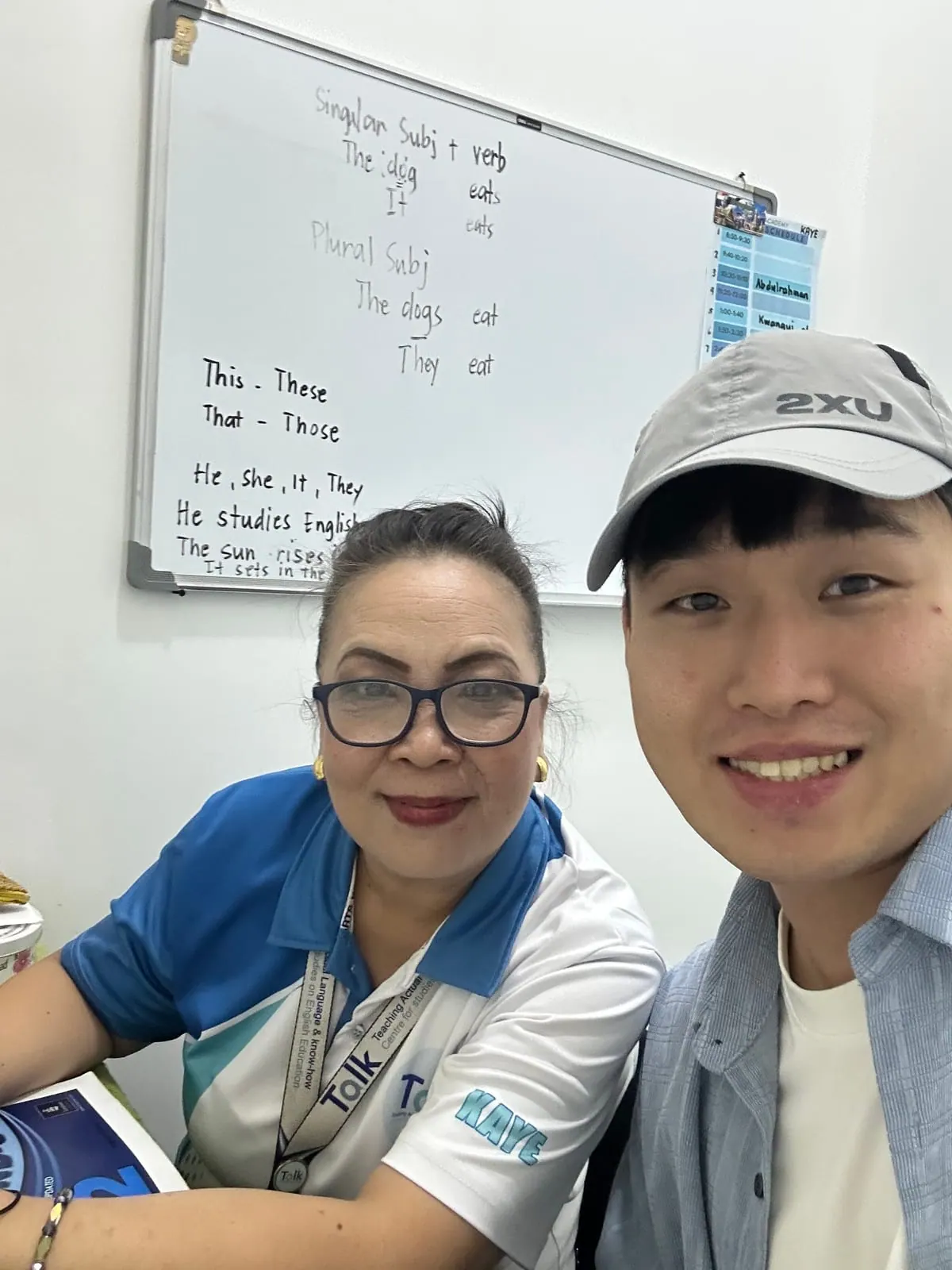
After class I'd also recommend the self-study space — the desks are big, perfect for bringing a tablet and coursebook to do tests and review. The canteen is spacious and bright, and at meals and breaks everyone gathers there and chats in English.
Six lessons a day sounds like a lot, but what really widens the gap is the hours between and after lessons. Whether there's a decent place to sit decides whether you review at all. The canteen point is even better: you'll eat anyway — here, that time just happens in English.
Who this suits
If you "understand when reading but can't get words out", this format works, because it won't let you just listen. Even with weak basics there's no reason to avoid group lessons. On not waiting until your English is perfect, see 2 weeks studying English in the Philippines — Yu-Ting. For Chih-Jen's life outside class, read life at an English school in Clark — Chih-Jen.
Group classes at an English school in the Philippines — what to check
- Maximum group size — eight or fewer?
- Lesson format — built to make you speak (topic, cold-calling, presentations)?
- Level fit — do they cover basics from scratch?
- Study space — is there somewhere to sit after class?
Enquiries
Read more Philippines English study reviews. Enrolment, dates and quotes are handled by our partner agencies.