Nationality mix at English schools in the Philippines: why 'balance' decides how much you speak (Thanh Hà)
The nationality mix at English schools in the Philippines comes up in almost every enquiry: "Are there many people from my country?" The funny thing is that the question hides two opposite worries. Too many, and you slip back into your own language the moment class ends. None at all, and by week three there's no one to relax with. Thanh Hà Tô, a Vietnamese student one month into a 12-week Talk 6 Hybrid A course at Talk Academy in Clark, answered exactly that.
Nationality mix at English schools in the Philippines — the word is 'balance'
The multinational environment trains my English reflexes anywhere, any time, and the nationality mix is well balanced — plenty of international friends to practise speaking with, plus a few fellow Vietnamese for a little warmth when I'm homesick.
The key word is balance — not "no one from my country", not "lots of them".
It isn't about willpower. Surround a tired brain with people who share your first language after eight periods and it will switch back. Spend twelve weeks with nobody who understands "I miss home", and staying the course gets hard. So the question to ask an agency isn't "are there people from my country?" but "what is the nationality mix right now?" How a mixed school fills the time outside class with English is shown vividly in 8 weeks studying English in Clark — Ngọc Thảo.
Eight periods a day — six one-to-one plus two group
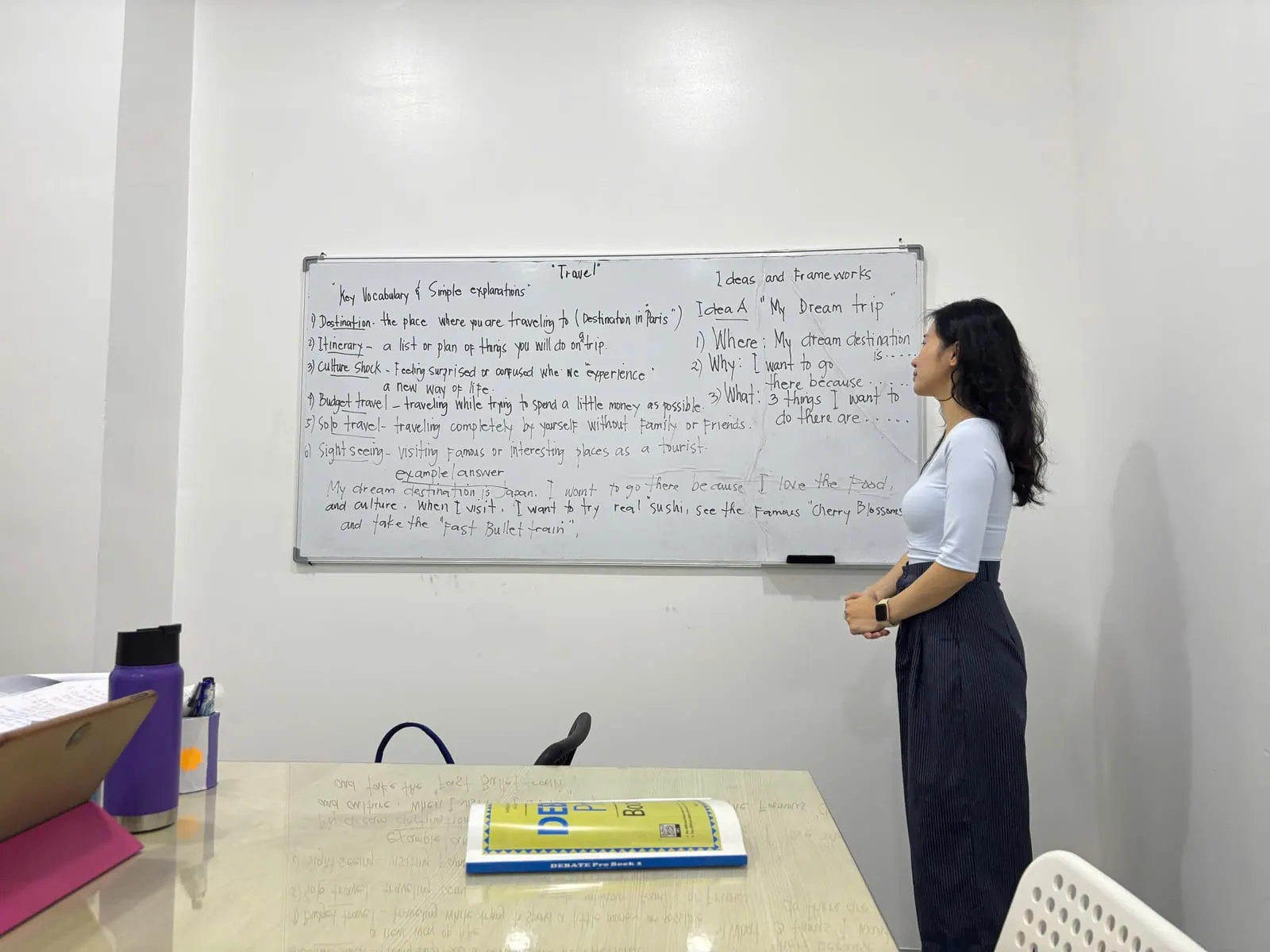
Every day at Talk Academy in Clark is packed with eight periods — six one-to-one lessons and two group classes.
Six one-to-one lessons means six times a day with nobody to hide behind. At schools in English-speaking countries, most of the timetable is group classes, usually with more students per class. You hear plenty of English, but the minutes you actually speak are far fewer. That number is the real difference of the Philippine model.
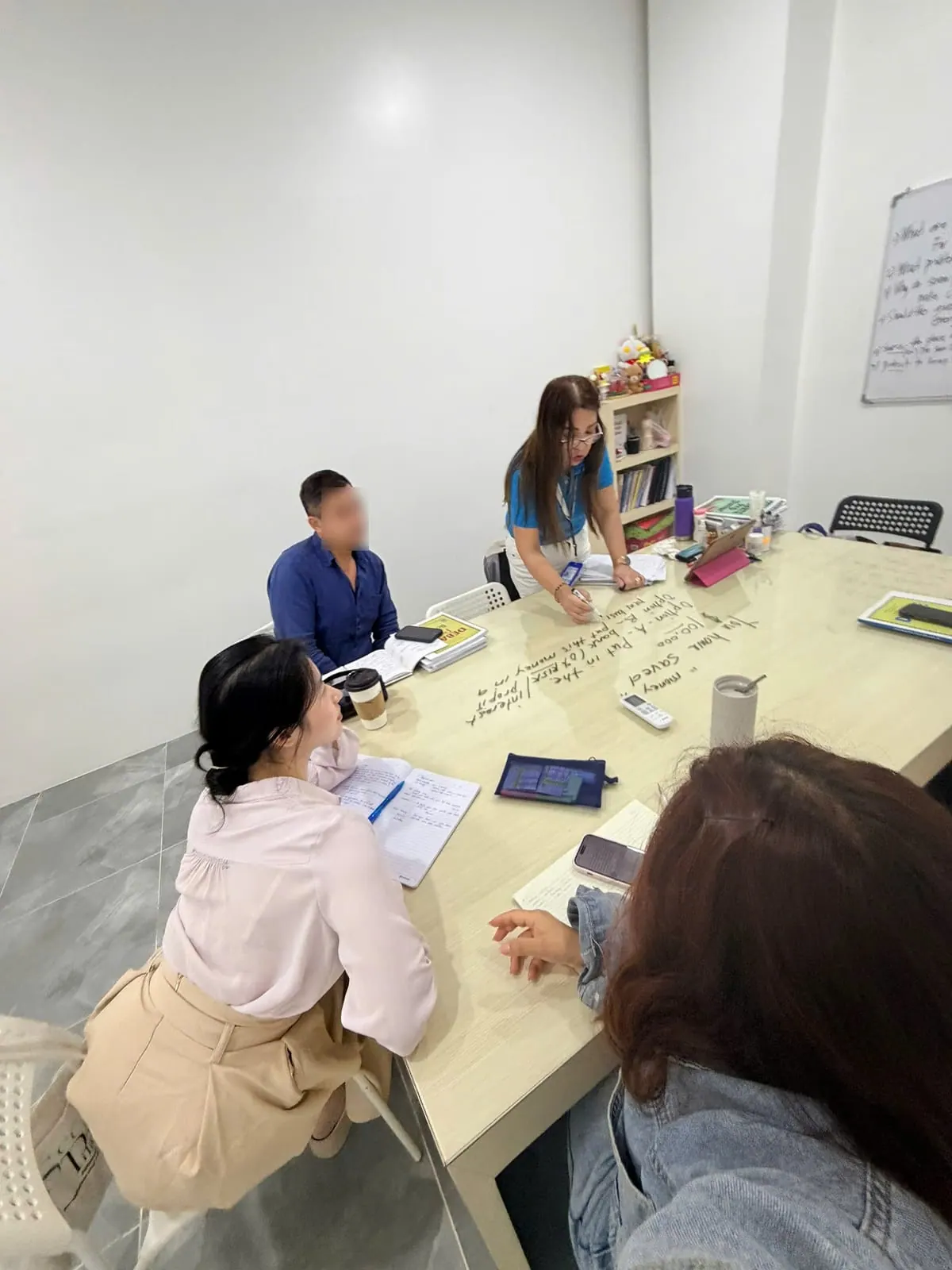
Groups of eight at most — 'everyone speaks' is division
My favourite part is the group class: there are never more than eight students, so the atmosphere stays lively, the teacher keeps everyone involved, and everyone gets a chance to speak.
"Everyone gets a chance" is really division. Split a lesson among eight and each person gets real minutes; split it among fifteen and a quiet student can go a whole period without speaking and no one notices. How a group class actually runs is described in detail in group classes at an English school in the Philippines — Chih-Jen.
And the food — ten out of ten
The school kitchen deserves ten out of ten as well: the food is clean, well cooked and suits my taste, so every worry I had before leaving simply disappeared.
Thanh Hà joked that teachers and friends had noticed some weight gain. On a twelve-week course that's half serious: eating well is what keeps you going through eight periods a day. (Three meals are served on weekdays.) If dorm food worries you, see English school dorm and meals in the Philippines — Hải Yến.
One month in
My first month of ESL study in the Philippines flew by like a dream!
A third of the course done; eight weeks to go.
Checking the nationality mix at English schools in the Philippines — three numbers
Ask for numbers, not impressions:
- Periods per day and the one-to-one share — how long you personally speak.
- Maximum group size — your share of each group lesson.
- The current nationality mix — not whether your compatriots are there, but whether it's balanced.
Those three numbers tell you more precisely than any brochure how many minutes a day you'll spend speaking English.
Enquiries
Read more Philippines English study reviews. Enrolment, dates and quotes are handled by our partner agencies, who can also tell you the current nationality mix.