
4-week English course in the Philippines: what changed first wasn't my score — Karin Hasegawa
If you are weighing up a 4-week English course in the Philippines, this is the account to read first. "What can four weeks actually change?" Karin Hasegawa, a Japanese student who spent four weeks on Talk 4 Hybrid A at Talk Academy in Clark, answered it herself.
4-week English course in the Philippines — the result was confidence
It was a short stay, but I came home confident enough to start conversations myself — that was the biggest result of my time abroad.
What she counts as the result is not a test score. Four weeks is not enough to rebuild grammar or add a mountain of vocabulary. What four weeks can change is the distance you feel before you open your mouth — and for most learners that is the highest wall.
What loosened her up: a teacher who jokes
The teachers worked jokes into their lessons, so I could speak English without freezing up…
Most of the time people do not stall because of ability but because of nerves. As long as being wrong feels embarrassing, nothing comes out. In a lesson where people laugh, that feeling fades. On a four-week course, a first week spent frozen turns four weeks into three — so the mood of the room decides a lot.
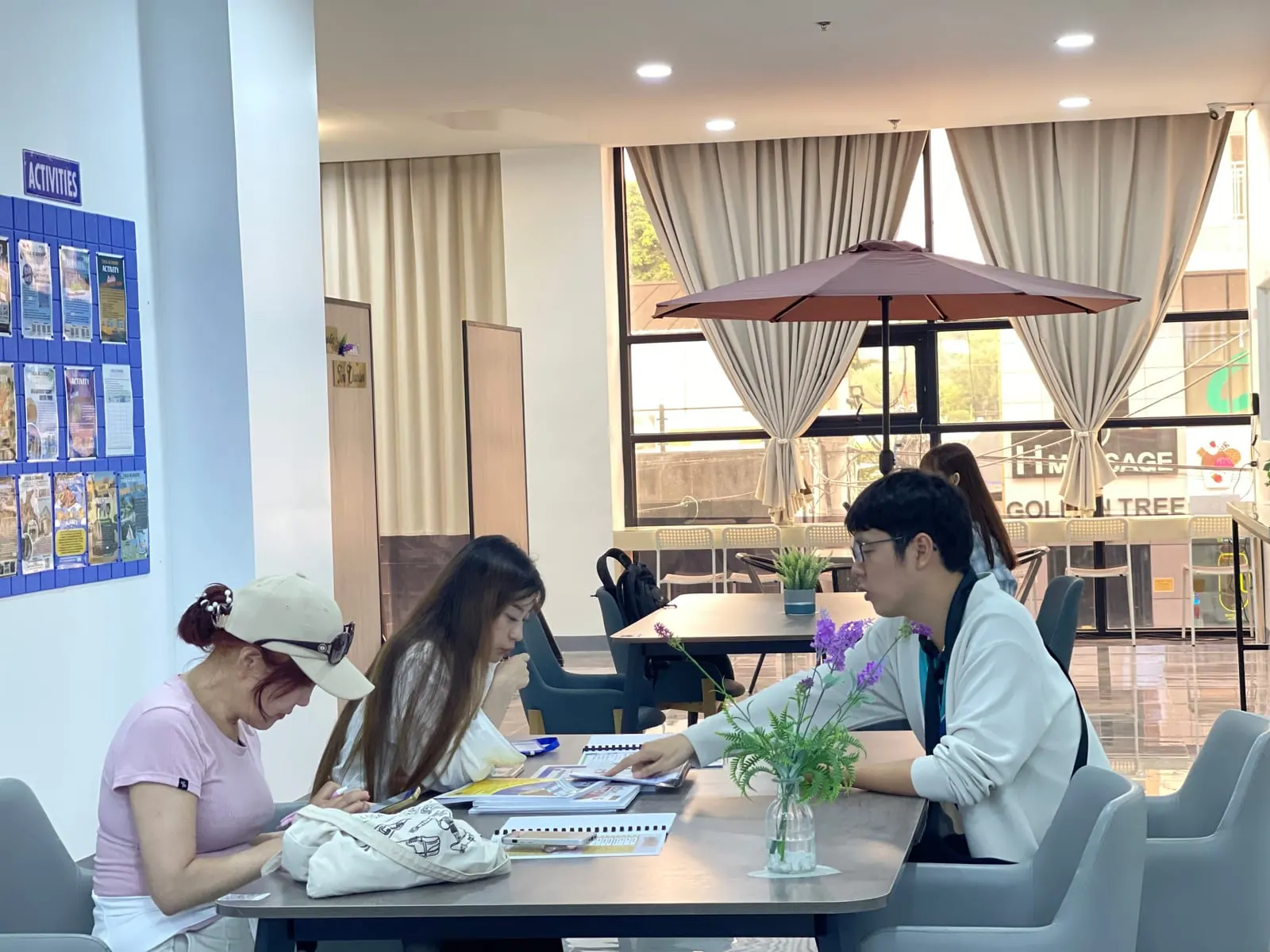
After every lesson, a 'class record'
After every class I received a 'class record' with the teacher's comments, which let me review the same day.
What the teacher corrected that day stays in your hand, in writing. On a short course there is little time to rewrite notes; a written record means ten minutes before bed is enough, and it does not fade overnight the way spoken correction does.
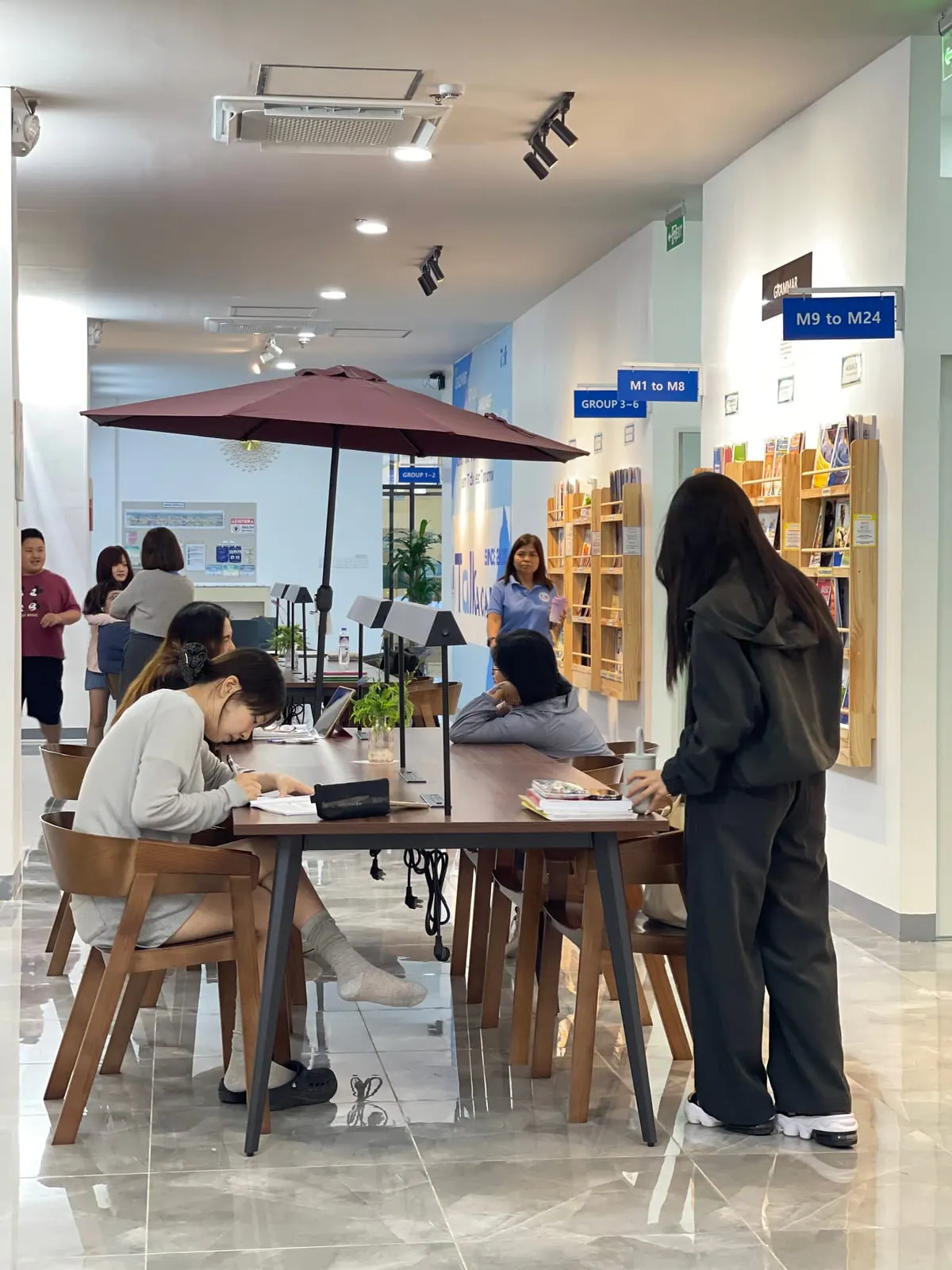
Talk 4 Hybrid A is four one-to-one periods and two group periods a day (groups of up to eight). Every teacher who teaches students is Filipino.
Roommates and friends — getting more talking out of four weeks
The dorm was clean and I shared a room with a Korean roommate.
On a 4-week English course in the Philippines, your roommate's nationality matters more than people think. Share with someone from your own country and the room runs in your first language. With different nationalities, the shared language in the room is English.

Days off, still in English
On days off I went out with friends to nearby cafés and malls, and we kept talking in English there too.
Four weeks contain about eight days off — close to 30% of the time. Fill them in your own language or spend them out with friends in English, and the total you get from the course changes. How English outside the classroom builds up is told well in 8 weeks studying English in Clark — Ngọc Thảo.

What four weeks will not change
- Grammar cannot be rebuilt from scratch.
- Vocabulary does not jump dramatically. It needs exposure and time.
- Test scores barely move. If a score is the goal, choose a longer course.
What four weeks changes is the threshold to speak and the habit of speaking. Aim at that and a short course does its job. Compare it with a longer stay in English immersion before the US — Taiyo Nishimura's 14 weeks.
Planning a 4-week English course in the Philippines — five checks
- Ask about your roommate's nationality.
- Check whether feedback is written down after lessons.
- Look for a relaxed teaching style.
- Plan your weekends in advance.
- Define success outside test scores.
Questions
Can four weeks really make a difference? It depends on what you count. Karin counts confidence and starting conversations herself. For a big score jump, four weeks is short.
Can a beginner go for a short course? Yes — with a high share of one-to-one lessons, beginners often see the clearest change. Aim to *start* speaking rather than to be fluent.
Enquiries
Read more Philippines English study reviews from other students. Enrolment, dates and quotes for Talk Academy are handled by our partner agencies.